Free Marketing Toolkit Opt-in
(02) 42444411 info@ybrmarketing.com.au
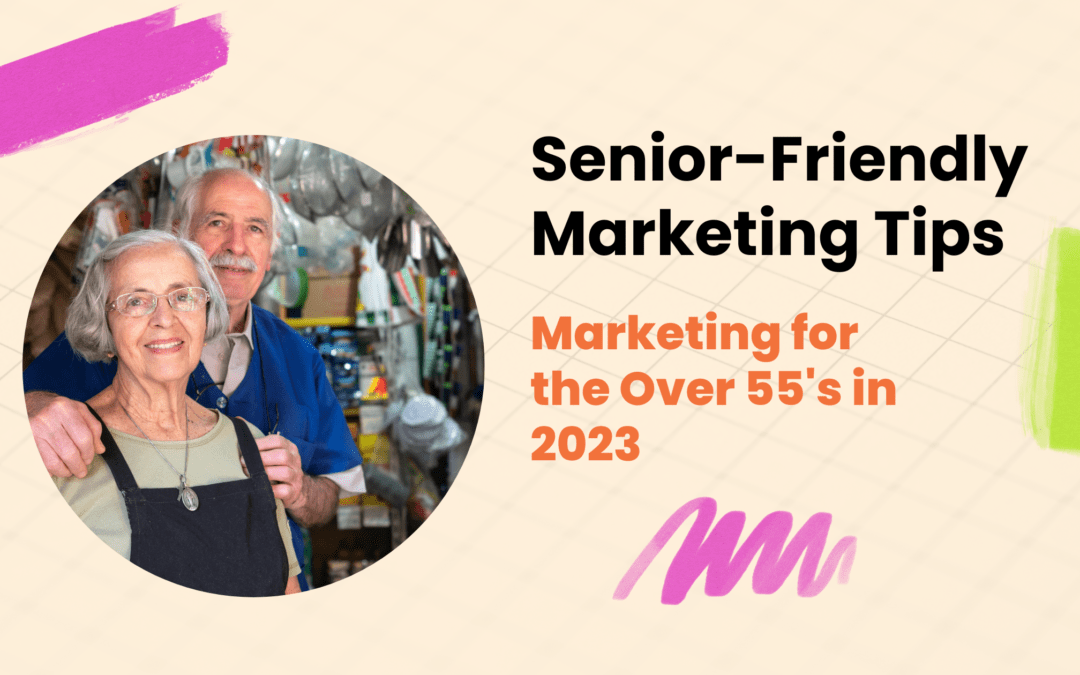
Senior-Friendly Marketing Tips for 2023

Senior-Friendly Marketing Tips for 2023

Why Seniors are the New Power Consumers: The Rising Importance of the Senior Market

In today’s digital age, it’s easy to get caught up in targeting younger demographics when it comes to marketing strategies. However, neglecting the 55+ age group means missing out on a significant and often overlooked market. Seniors are more tech-savvy than ever before and are actively seeking products and services that cater to their needs and preferences. Whether you’re promoting retirement communities, healthcare services, business start-ups or leisure activities, it’s crucial to understand how to effectively connect with this demographic. In this article, we will explore the top tips and tricks for senior-friendly marketing, ensuring that your messages resonate with the 55+ age group. From creating relatable content to utilising the right channels, we’ll dive into strategies that will not only boost your visibility but also build trust and loyalty among this valuable audience. So, let’s dive in and discover how to unlock the untapped potential of senior-friendly marketing!

Understanding the Senior Demographic

To effectively market to seniors, it’s essential to understand their unique characteristics and preferences. The 55+ age group is diverse, comprising individuals with varying interests, lifestyles, and needs. However, there are some common traits that can help guide your marketing efforts.

Firstly, it’s important to recognise that many seniors have a strong sense of independence and self-reliance. They value their autonomy and appreciate marketing messages that respect their decision-making abilities. Secondly, seniors are often looking for products and services that enhance their quality of life, whether it’s health and wellness solutions, retirement planning, or leisure activities. Lastly, it’s crucial to acknowledge that many seniors have a significant amount of disposable income, making them an attractive market segment for businesses across various industries.

By understanding these key aspects of the senior demographic, you can tailor your marketing strategies to resonate with their specific needs and aspirations.

Why market to seniors?

Before we delve into the strategies for senior-friendly marketing, let’s first address why it’s important to target this demographic. The 55+ age group represents a substantial and growing market segment. According to recent statistics, there are over 52 million individuals aged 55 and older in the United States alone, and this number is expected to reach 95 million by 2060.

Furthermore, seniors have a significant purchasing power, with an estimated $3.2 trillion in annual spending. With such a substantial market potential, it’s clear that businesses cannot afford to overlook this demographic. By developing marketing strategies that effectively engage seniors, you can tap into this lucrative market and drive business growth.

Challenges in marketing to seniors

While marketing to seniors presents numerous opportunities, it also comes with its fair share of challenges. One of the main obstacles is the misconception that seniors are not technologically inclined. While it’s true that some seniors may not be as comfortable with technology as younger generations, the gap is narrowing. Many seniors are embracing digital platforms, using smartphones, tablets, and computers to connect with others, access information, and make purchasing decisions.

Another challenge is the tendency to stereotype seniors as a homogeneous group. While there are commonalities among seniors, it’s crucial to recognise their diversity and avoid making assumptions based on age alone. By taking the time to understand the unique needs and preferences of your target audience within the senior demographic, you can tailor your marketing messages to resonate with them on a personal level.

Additionally, it’s important to address any potential barriers that seniors may face when interacting with your marketing materials. This can include font size, colour contrast, and user-friendly website navigation. By ensuring that your marketing assets are accessible and easy to understand, you can eliminate any potential obstacles that may hinder seniors from engaging with your brand.

Senior-friendly marketing strategies

Now that we have a solid understanding of the senior demographic and the challenges associated with marketing to this group, let’s explore some effective strategies for senior-friendly marketing.

Creating targeted messaging for seniors

To effectively connect with seniors, it’s crucial to develop messaging that resonates with their unique needs and aspirations. Start by identifying the key pain points and desires of your target audience within the senior demographic. Are they looking for ways to stay active and healthy? Are they interested in financial planning for retirement, are the starting a new business? By understanding their motivations, you can craft messaging that speaks directly to their specific concerns.

When creating content for seniors, it’s important to use language that is clear, concise, and easy to understand. Avoid using jargon or technical terms that may confuse or alienate your audience. Instead, focus on using relatable language that speaks to their experiences and desires. Additionally, incorporating storytelling and personal anecdotes can help create an emotional connection with seniors and make your messaging more memorable.

Utilising traditional marketing channels

While digital marketing is essential in today’s landscape, it’s important not to overlook the power of traditional marketing channels when targeting seniors. Many seniors still rely on traditional media, such as television, radio, and print publications, as their primary sources of information. By including these channels in your marketing mix, you can reach a wider audience and increase your brand visibility among seniors.

When utilising traditional marketing channels, it’s important to be strategic in your approach. Consider partnering with media outlets that have a strong senior following or sponsoring events that cater to this demographic. Additionally, make sure your messaging is tailored to the specific channel you’re using. For example, television advertisements may require a more visual and engaging approach, while radio spots may rely on compelling storytelling and sound effects to capture attention.

Harnessing the power of digital marketing

While traditional marketing channels are valuable, digital marketing offers unique opportunities to connect with seniors on a more personal level. Many seniors are active on social media platforms, such as Facebook and Instagram, and use search engines to research products and services. By developing a strong online presence, you can engage with seniors where they spend a significant portion of their time.

When implementing digital marketing strategies, it’s important to optimise your online content for search engines. Seniors often rely on search engines to find information, so it’s crucial to ensure that your website appears in relevant search results. This can be achieved through search engine optimisation (SEO) techniques, such as keyword research, content optimisation, and link building.

Additionally, consider incorporating video marketing into your digital strategy. Seniors are increasingly consuming video content, making it an effective way to capture their attention and convey your brand message. Whether it’s through product demonstrations, customer testimonials, or educational videos, video marketing can help build trust and credibility among seniors.

Designing user-friendly websites and advertisements

When it comes to marketing to seniors, user experience is paramount. Many seniors may have age-related visual impairments or difficulties navigating complex websites. To ensure that your online assets are user-friendly, consider implementing the following design principles:

– Use clear and legible fonts with an appropriate size and colour contrast.

– Ensure that your website is easy to navigate and intuitive to use, with clear call-to-action buttons.

– Optimise your website for mobile devices, as many seniors use smartphones and tablets for online browsing.

– Include relevant and engaging visuals that enhance comprehension and capture attention.

By designing user-friendly websites and advertisements, you can create a seamless and enjoyable experience for seniors, encouraging them to engage with your brand and take the desired actions.

Building trust and credibility with seniors

Trust is a crucial factor in senior-friendly marketing. Seniors are more likely to engage with brands they perceive as trustworthy and credible. To build trust among this demographic, consider implementing the following strategies:

– Highlight testimonials and reviews from satisfied senior customers to showcase positive experiences.

– Develop partnerships with reputable organizations and associations that cater to seniors.

– Provide transparent and accurate information about your products and services, including pricing, benefits, and potential risks.

– Offer exceptional customer service and support, addressing any concerns or questions seniors may have promptly and empathetically.

By prioritising trust and credibility in your marketing efforts, you can establish a strong relationship with seniors, fostering loyalty and repeat business.

Measuring success in senior-friendly marketing

As with any marketing campaign, it’s essential to measure the success of your senior-friendly marketing strategies. Start by defining clear and measurable goals that align with your overall business objectives. Are you looking to increase brand awareness among seniors? Are you aiming to drive conversions and sales within this demographic? By establishing specific metrics, such as website traffic, engagement rates, and conversion rates, you can track the effectiveness of your campaigns and make data-driven decisions.

In addition to quantitative metrics, it’s also important to gather qualitative feedback from seniors. Conduct surveys, focus groups, or interviews to gain insights into their perceptions and experiences with your brand. This feedback can help you refine your marketing strategies and ensure that you’re continuously improving your approach to better meet the needs of this demographic.

To Summarise

Marketing to seniors requires a thoughtful and strategic approach. By understanding the unique characteristics, needs, and preferences of the 55+ age group, you can develop effective marketing strategies that resonate with this valuable demographic. From creating targeted messaging to utilising traditional and digital marketing channels, there are numerous strategies to connect with seniors and unlock the untapped potential of senior-friendly marketing. By prioritising user experience, building trust and credibility, and measuring success, you can create meaningful connections with seniors, driving business growth and establishing long-term relationships. So, embrace the opportunities that senior-friendly marketing offers and position your brand as a trusted partner for this growing market segment.

In conclusion, effectively marketing to the 55+ age group can be both rewarding and profitable for your business. Don’t forget to check out our cutting-edge Seniors-as-a-Service (SaaS) offering, which can help you seamlessly connect with this vital demographic! Thanks for stopping by, and if you have any questions or require assistance, our team at YBR Marketing is here for you.

Ready to discover the transformative potential of Seniors-as-a-Service Accelerator Plans for your business? Sign up for a free consultation with our experts today!

Until next time,
John from YBR Marketing
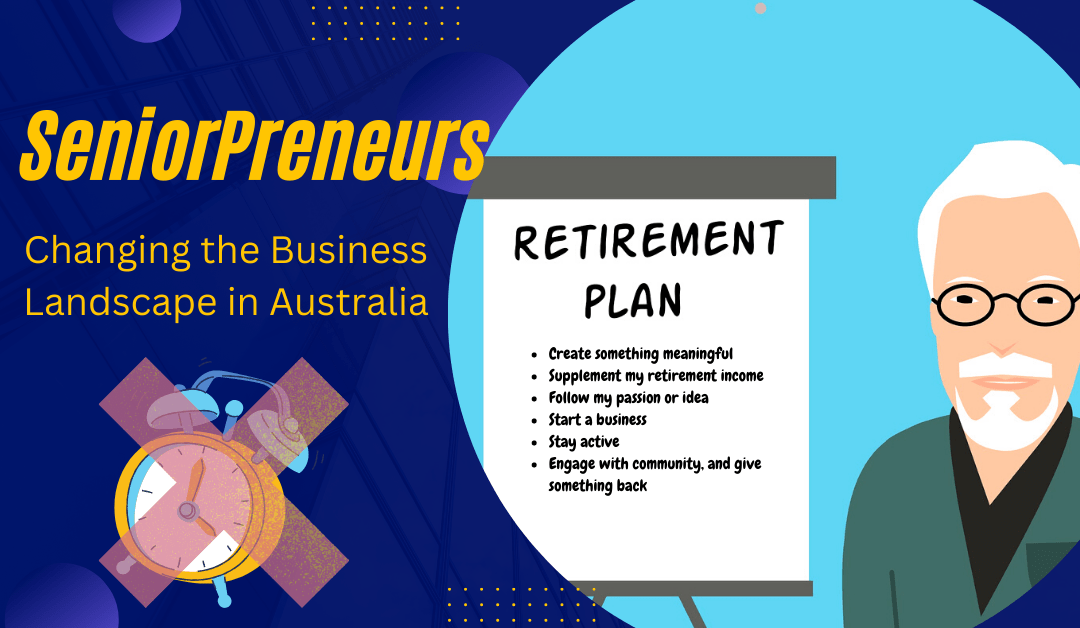
How SeniorPreneurs are Changing the Business Landscape in Australia

How SeniorPreneurs are Changing the Business Landscape in Australia

The New SeniorPreneur

Retirement doesn’t have to mean the end of your career. In fact, a growing number of seniors in Australia are becoming entrepreneurs, starting successful businesses and making their mark in the business world. These SeniorPreneurs are proving that age is just a number when it comes to entrepreneurship.

Who are SeniorPreneurs?

SeniorPreneurs are individuals who start their own businesses after the age of 50. They are often retirees or individuals who have left the traditional workforce but still have a desire to work and contribute to society. SeniorPreneurs come from a variety of backgrounds and industries, and their businesses range from small startups to larger enterprises.
SeniorPreneurs are becoming increasingly common in Australia, with many individuals choosing to start their own businesses later in life. These entrepreneurs bring a wealth of experience and knowledge to their ventures, and often have a unique perspective on the market.
Many SeniorPreneurs are motivated by a desire to create something meaningful, or to solve a problem they have encountered in their own lives. They may also be driven by a desire to stay active and engaged in their communities, or to supplement their retirement income. Whatever their motivations, SeniorPreneurs are an important and growing segment of the Australian business landscape.

Why are SeniorPreneurs on the rise in Australia?

There are several reasons why SeniorPreneurs are on the rise in Australia. Firstly, the aging population means that there are more individuals over the age of 50 who are looking for ways to stay active and engaged in the workforce, and starting a business can be a great way to do this, as it allows individuals to use their skills and experience in a new and exciting way.
Finally, advances in technology and changes in the business landscape have made it easier for individuals to start and run their own businesses, regardless of their age.

What challenges do SeniorPreneurs face?

While SeniorPreneurs are proving that age is just a number when it comes to entrepreneurship, they still face some unique challenges. One of the biggest challenges is access to funding, as many investors may be hesitant to invest in older entrepreneurs.
Additionally, SeniorPreneurs may face age discrimination in the workforce, which can make it difficult to find clients or customers. Finally, balancing the demands of running a business with other responsibilities, such as caring for family members or managing health issues, can also be a challenge for SeniorPreneurs.

Another challenge that SeniorPreneurs may face is keeping up with technology and digital marketing. Many older entrepreneurs may not have grown up with the same level of technology as younger generations, which can make it difficult to navigate the digital landscape. However, there are resources available to help SeniorPreneurs learn and adapt to new technologies, such as online courses and mentorship programs.
It’s important for SeniorPreneurs to stay up-to-date with the latest trends and tools in order to remain competitive in their industries.

Despite these challenges, SeniorPreneurs are proving that age is just a number and that they have a wealth of knowledge and experience to bring to the table.

Success stories of SeniorPreneurs in Australia.

Despite the challenges they face, SeniorPreneurs in Australia are making their mark in the business world. One success story is that of Janine Allis, founder of Boost Juice, who started the business at the age of 42 and has since expanded it to over 500 stores worldwide. Another example is that of Peter Strong, who started his own consulting business at the age of 60 and has since become a leading voice for small business in Australia. These SeniorPreneurs prove that age is just a number when it comes to entrepreneurship and that it’s never too late to start a successful business.

Another inspiring SeniorPreneur success story is that of John Ilhan, founder of Crazy John’s mobile phone stores. Ilhan started the business at the age of 33 and grew it into a multi-million dollar company with over 120 stores across Australia. Sadly, Ilhan passed away in 2007, but his legacy lives on as a testament to the potential of SeniorPreneurs in Australia. These success stories and others, show that age should not be a barrier to entrepreneurship and that SeniorPreneurs have a wealth of experience and knowledge to bring to the business world.

How can aspiring SeniorPreneurs get started?

One of the first steps for aspiring SeniorPreneurs is to identify their passions and skills. This can involve reflecting on past experiences, hobbies, and interests to determine what they are truly passionate about. From there, they can explore potential business ideas that align with those passions and skills.

It’s also important for SeniorPreneurs to seek out resources and support, such as mentorship programs, business incubators, and networking events specifically geared towards older entrepreneurs. These resources can provide valuable guidance and connections to help SeniorPreneurs get started and grow their businesses. SeniorPreneurs should have a solid understanding of the market they are entering and develop a strong business plan. With the right attitude, determination and guidance, SeniorPreneurs can successfully launch and grow their own businesses and make a positive impact in their communities and to their bank balance.

Whether you’re a start-up and need to grow your existing business, or have an established company that is looking to get past a plateau, YBR Marketing will create a customized growth strategy for you. With our SaaS Growth Strategy we’ll show you how to profit from your unique perspective and experience.

We’re seniorpreneurs ourselves. We know what you need to start, grow your business and get to the next level. We are the quiet partner behind highly successful SeniorPreneurs and we want to be the same partner for you, through our Seniors as a Service (SaaS) Strategies. Like to learn More? Contact one of our SaaS professionals today!

“Dedicated to your business success”

John

wollongong digital marketing

How To Make Your Ad Campaign More Effective Over Time

How To Make Your Ad Campaign More Effective Over Time

Google AdWords has been around for many years now, and there are lots of people that use this platform to promote their business. The question is, how long will your ad stay on top of the search results?

Here’s how to make it happen.

If you’re using Google AdWords, then you probably know that you need to set up an account with them. Creating a Google Ads Account”

Once you’ve done that, you’ll need to decide what type of advertisement you’d like to run. There are two main options: text ads and display ads. Text ads are basically just words that appear at the top of the page, while display ads are images that show up when users scroll down the page.

Create an effective ad group.

After you’ve decided which kind of ad you want to use, you’ll need to choose where you want to place it. This decision will depend on how much money you want to spend. Display ads cost more than text ads because they take up more space on the screen. However, they also tend to generate higher click through rates (CTRs). So, if you’re looking to make the most out of your budget, then display ads might be the way to go.

Set up your keywords.

Once you’ve chosen an ad type, you’ll need to decide what words you want to show up when people search for those terms. These are called keywords. If you’re using paid advertising, you’ll need to set up keywords before you start running campaigns. You can do this by going to the “Keywords” tab in the “Ad group settings.”

(“SEO Keyword Research and Mapping”)

Choose your bid strategy.

There are two main strategies for bidding on keywords: cost per click (CPC) and cost per impression (CPI). CPC bids are based on how much advertisers are willing to pay for each click on their ads. CPI bids are based on how often users see your ads.

Test your campaigns.

If you’re not seeing results after a few weeks, try testing different ad groups, ad copy, and landing pages. (“How to Create a Lead Generation Landing Page”)

Also consider changing your bid strategy.

(“Reasons Why Your Google Ads Don’t Work & How To Fix ’em”)

So there you have it, if you’re thinking of starting a Google Ads campaign and you want it to stay up at the top of the results, then remember these steps. In time, your ad will reach the first page and stay there. Besides, who doesn’t want to be advertising on the first page of Google? Well what are you waiting for? Get started!

Go to our “Free Tools” for more resources from professional  standard SOPs to free software apps that can really boost your marketing without draining your wallet..

Dedicated to your marketing success

John

wollongong digital marketing

What’s Your Unique Selling Position?

What’s Your Unique Selling Position?

Get Out Of The Commodity Business By Developing A Unique Selling Proposition

You know you’re marketing your business as a commodity when prospects start the conversation by asking you about price.

Positioning yourself as a commodity and hence being shopped on price alone is a terrible position for a small business owner to be in. It’s soul crushing and this race to the bottom is bound to end in tears.

The answer is to develop a unique selling proposition (USP). Something that positions you differently, so that prospects are forced to make and apples-to-oranges comparison when comparing you with your competitor.

If they can do an apples-to-apples comparison of you and your competitors then it comes down to price and you’re toast, because there’s always someone willing to sell cheaper than you.

There’s Nothing New Under The Sun

Very few if any businesses or products are truly unique, so a common question is, “there’s nothing unique about my business, how do I develop a USP?”.

There’s no quick and simple answer to that question but here are a few ideas.

Firstly we want to get into the mind of our prospect. What do they really want? It’s rarely the thing you are selling, it’s usually the result of the thing you are selling. The difference may seem subtle but it’s huge.

For example someone buying a $50 watch is buying something very different from a person buying a $50,000 watch. In the latter case they are likely buying status, luxury and exclusivity. Sure they want it to tell the time just like the buyer of the $50 watch but that’s unlikely to be their core motivation.

So to get into the mind of the prospect, we need to discover what result they are actually buying. Once you understand this, you then need to craft your unique selling proposition based on the result your prospects want to achieve.

For example if you’re a printer, you’re a commodity business. You want to get out of the commodity business as quickly as possible. I don’t mean get out of the industry but you do need to change how you position yourself.

Stop selling business cards, letterheads and printing and start asking open ended questions such as, “Why are you coming to a printer? What is it that you want achieve?”. The prospect doesn’t want business cards and letterheads, they want what they think business cards and letterheads are going to do for their business.

So you could sit down with them and and say, “What are you trying to accomplish? Let’s do a printing audit and evaluate all of the things you’re trying to use printing for. By taking them through the process, you can charge them to do a printing audit. Then if they end up hiring you to do their printing, you can apply that consulting fee towards printing. This way you’re no longer viewed as a printer anymore. You’re now viewed as an advisor that’s serving their needs.

Use Outrageous Guarantees

Another great strategy for creating uniqueness in your offer is an outrageous guarantee. One which completely reverses the risk of the transaction.

To be truly unique when using this technique you must avoid the vague crap that everyone says e.g. satisfaction guaranteed, service quality, dependability.

You must have a very specific guarantee to address the fear or uncertainty that the prospect has about the transaction.

For example if you’re in the pest control business you’re customers want to know:

  1. The pests won’t come back
  2. The technician won’t leave their house dirty
  3. That you won’t poison their family with chemicals

So you’re outrageous guarantee could be something like this:

“We guarantee to rid your home of ants forever, without the use of toxic chemicals, while leaving your home in the same clean and tidy condition we found it. If you aren’t absolutely delighted with the service provided, we insist that you tell us and we’ll refund double your money back.”

Compare that to a weak, vague guarantee like, “satisfaction guaranteed”.

Does an outrageous guarantee like the one above entail risk for the pest control service provider? Sure, if they do a crappy job. But in a case like that they’re likely to have to give the customer a refund anyway. It may even be a legal requirement.

Here’s the other thing about guarantees. If you’re an ethical operator, you are most likely already offering a guarantee but you just aren’t using it to your advantage in your marketing.

So why not make a point of talking about something that you’re already doing.

Most people are honest and won’t abuse guarantees if they’ve received the service they were promised.

Even after accounting for the few people who do abuse them, you’ll be far ahead because a strong guarantee will attract more customers than a weak and vague one.

A strong, results oriented guarantee will also drive you to deliver a great customer experience. This alone ensures that it’s worthwhile to have a strong guarantee.

Your customers have their own fears. When you can name the fears and guarantee
against them in your marketing, you give yourself an overwhelming advantage
over your competitors.

Pricing Strategy

I’m sometimes asked, “can’t lowest price be my USP?”. Sure it can, but can you absolutely guarantee that everything you sell will be priced lower than all your competitors including the behemoths like Target and Kmart? Unlikely.

So a USP that says “lowest prices on some things, some of the time” is not quite so compelling.

The fact is if you’re a small or medium business, you’re unlikely to beat the big discounters at the lowest price game.

Truth be told, you probably don’t want to. By charging higher prices, you attract a better quality client. As counter intuitive as it may seem, you get far less grief from high end customers than you do from low end ones. I’ve seen and experienced this in multiple businesses across multiple industries.

A better option than discounting is to increase the value of your offering.

Bundling in bonuses, adding services, customising the solution can all be of genuine value to your customer but can cost you very little to do.

This also helps you create that apples-to-oranges comparison that gets you out of the commodity game.

Don’t hate the player, hate the game. So as hard as it may be to resist, don’t play the commodity/price game.

Dedicated To Your Marketing Success

John

wollongong digital marketing

“I would like to acknowledge the wonderful Alan Dib from Successwise

Why I Need Google Ads Conversion Tracking

Why I Need Google Ads Conversion Tracking

Easy Steps to Follow?

Lucky for you, it’s seriously simple to track conversions using Google Ads. In this guide, I’ll take you step by step through how to set up and monitor conversions for your online ads and marketing campaigns.

You’ve got your Google Ads campaign up and running, and your ads and keywords are starting to generate an impressive number of clicks. Great! But unless you’ve got conversion tracking installed, you won’t be able to see how many of those clicks are actually resulting in sales. 

conversion touch points

Conversion Touch Points

Conversion tracking is a system that allows you to monitor the performance of your Google Ads campaigns at an individual level. With this information, you can make changes to your account that will optimize your ads and increase ROI.

In order to get started, you’ll need to set up conversion tracking in Google Ads, which involves three things:

1) Turning on conversion tracking for each campaign or ad group (this is done by going into the “Settings” tab under “Tools”)

2) Setting up conversion values for each conversion type you want to track (you can do this by going into the “Conversions” tab under “Tools”)

3) Creating goals for each conversion type (the goal creation process is the same as setting up the conversion types)

Google Ads setup objectives

Why It’s Important To Track Conversions In Google Ads

Google Ads can be a powerful tool for your business, but it’s only as powerful as the data you have about what works and what doesn’t.

In order to make the most out of your advertising budget, you need to know how many conversions each ad brings in. This is where conversion tracking comes in! Conversion tracking allows you to see which ads are driving the most conversions and then use that information to make adjustments that will help optimize your campaigns.

You can use conversion tracking with any of Google’s ad types, including text ads (formerly known as Search Network), image ads (formerly known as Display Network), remarketing ads (formerly known as GDN), YouTube video ads, and shopping ads.

Understanding Google Ads Conversions

Google Ads tracking is a powerful tool that allows you to track the effectiveness of your digital marketing campaigns. But if you’re looking to track conversions in Google Ads, you need to define your conversion, install the proper tracking tag, and choose an attribution model. Of course, if it were that simple, we wouldn’t need an entire blog post for it. We’re going to get into the step-by-step instructions for this shortly, but before we do, let’s unpack what each of those terms means so you can get a full picture of what this all means for your Google Ads account.

Defining Your Conversion

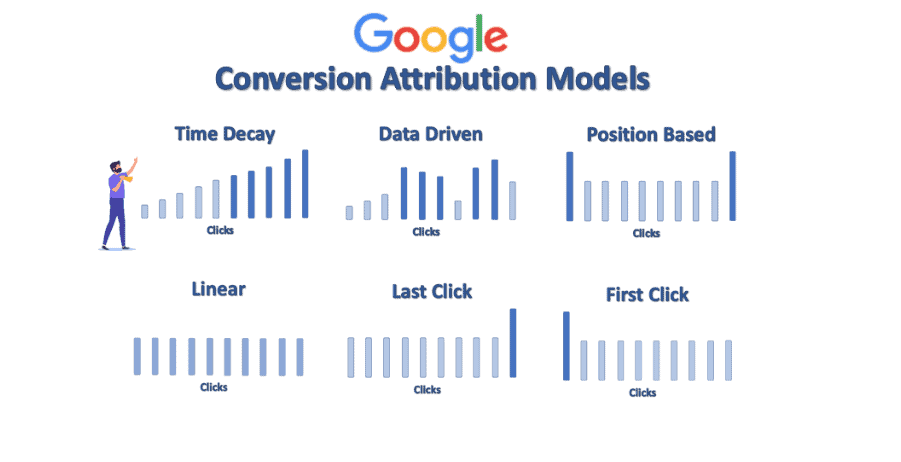
When you set up conversion tracking, you’ll need to choose a method for counting your conversions. This method is called an attribution model, and it can be either first click, last click or linear. The choice of attribution model depends on how many ads a user interacts with before completing a conversion action.

First click attribution gives all the credit to the first ad they interact with; last click attribution gives all the credit to the last ad they interacted with; linear attribution gives each ad a fraction of the credit based on how many times they interacted with each one before completing a conversion action.

attribution model

Conversion value is an option within some conversion actions that allows you to assign a specific value towards that given action. For example, a business might know that form-fills from a specific landing page lead to a $2000 job versus a $200 one, so that page’s conversion action will have that value applied to it. This can impact bidding strategies within your account, like maximize conversion value.

Google tag is a code you add to your website that acts as the “middle man” between your website and your Google Ads account. We’ll fully explain the Google tag installation process and purpose later. For now, keep in mind that this is what enables your website to accurately signal completed actions back to your Google Ads account.

There are several types of conversion actions in Google Ads, and each one has a different purpose. For example, a click-through is just that: someone clicked on your ad and then visited your landing page. A form-fill is when a user filled out an online form (usually to receive more information about your product). A sale is when someone makes a purchase through your website. Here are the five main types:

Website actions are the most basic or well-known types of Google Ads conversions. A website action could be a purchase, form-fill, button click, and more.

Website conversions are when your website visitors take an action on your site.

These are the most basic or well-known types of Google Ads conversions. A website action could be a purchase, form-fill, button click, and more.

Phone calls: This conversion type is also very popular as it’s simply a call to your business that originates from your Google Ads.

If you have a local business, this is one of the best ways to track conversions, since Google Ads can provide you with details about the number of calls your ads received and who made them.

The only downside is that there are no details on how many people actually went through with buying something once they called—you just get to know how many people called.

App installs and in-app conversions: These only apply to businesses that are advertising an app. Their purpose is to count app downloads or other interactions within an app.

App installs: When someone clicks on your ad and downloads your app, Google Ads counts this as a conversion.

In-app conversions: If someone opens your app after clicking on the ad, Google Ads counts this as a conversion. In-app conversions also include purchases, upgrades, or subscriptions made within the app.

If you’re not advertising an app, then these data types won’t apply to you.

Imported or offline conversions: These are actions that happen offline, but may have originated from an ad. You would import those tracked offline actions, such as an over-the-phone sale or in-person action, via a customer relationship management (CRM) platform.

Google Ads Conversion Tracking (GATC): This is the easiest way to track conversions on Google Ads. GATC is a snippet of code that you add to your site’s code so it can track actions on your site and report them back to Google Ads as conversions.

Free Professional Standard SOP: “Adding Google Ads conversion tracking to a site (using GTM)”

When a user completes an action that is specific to an advertiser’s physical location, it’s considered a local conversion action. These are automatically defined for you by Google Ads since they occur only across Google’s products or services, like Google Maps. Some examples of local actions are clicks to call, viewing a menu, or getting directions.

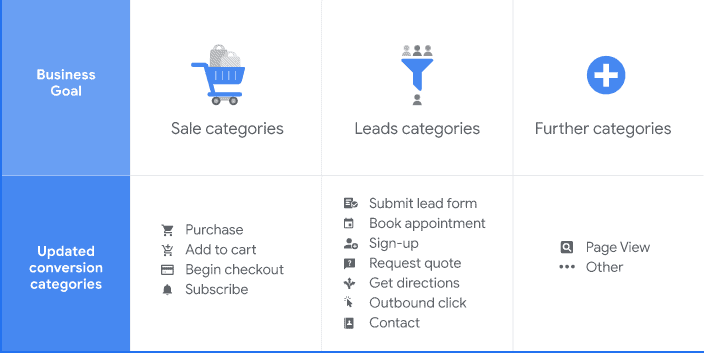
You’ll also have to choose a conversion category for your conversion actions. The point of this is to make segmenting your PPC reporting easier later by separating out data by category. There are 12+ conversion categories in Google Ads, but Google containers them into types:

Sale categories: Making a purchase, adding an item to a cart, initiating checkout, or subscribing to a recurring service are all examples of sales categories. These are the ones you’ll be familiar with if you’ve ever made a purchase online before—they’re what you see at the end of an e-commerce checkout process!

Non-sale categories: Clicking on an email newsletter signup form or filling out a contact form are examples of non-sale conversions. These kinds of actions are important because they represent potential customers who have become aware of your brand but haven’t yet made the decision to buy anything.

Leads categories: These include other website actions as well as local actions, such as submitting a lead form, booking an appointment, requesting a quote, calling your business, or getting directions.

There are further categories you have the option to select for unique Google Ads conversion tracking situations, like page views or downloads.

Conversion types: You can also choose from different conversion types. These include:

-Download

-Click on a URL

-Click on a phone number

-Click on an image (that is not an image ad)

conversion category types

Setting up Google Ads conversion tracking can be done in three steps.

Now that you know what to expect during the process, let’s walk through a basic website conversion action set up! In order to set up conversion tracking, you’ll need:

A website to place your Google tag code.

The ability to edit your website code: You or your web developer will have to paste a short snippet of code onto your website.

There are two core steps to start your Google Ads conversion tracking journey: creating a conversion action and installing your Google tag.

Step 1: Create a conversion action.

The first step for a standard Google Ads conversion tracking setup is creating a conversion action within the Google Ads platform. Here are the quick, easy steps to do so:

1. Sign into your Google Ads account.

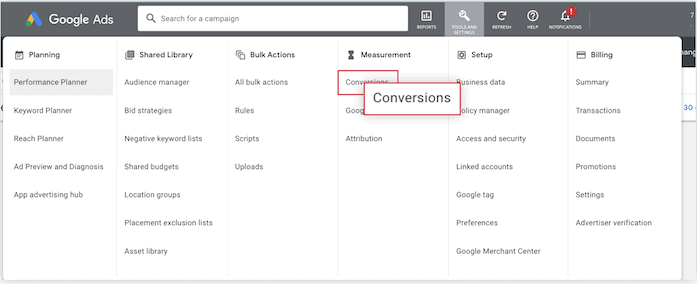
2. In the upper right corner, click into the tools menu, and select the Conversions option located under the Measurement bucket.

3. You’ll be brought to the summary section within your Conversions view, where you’ll want to click +New conversion action.

4. Select website as your type of conversion action and follow the prompts to enter your domain and scan your website. This is to check if you have the Google tag installed on your site. If you don’t, you’ll receive a snippet of code you’ll be prompted to put on your website.

5. Choose how you want to set up your conversion action: either URL setup or manual setup (more on this below).

Which Setup is best?

While a URL setup is quicker and easier, it will only apply to you if you’re looking to track a page load as a conversion.

A manual setup allows you to track clicks on buttons or links, with the option to customize the event tag with conversion value tracking and transaction IDs.

It’s a fairly easy process. You just follow the prompts, and during this step you’ll select an attribution model and other settings. Click on the links below to 

Instructions for a URL setup,

Instructions for a manual setup.

I’ve linked to an Attribution Model Guide, so you can decide which one is right for you.

Guide to attribution models.

Step #2: Set up your Google tag

If you’re ready to get started with Google Ads conversion tracking, the next step is going to depend on whether or not your Google tag is already set up.

If your Google tag is already set up and you created your conversion action using a URL, then you’re done and good to start seeing data on that conversion.

If your Google tag is not set up and you created your conversion action using a URL, you’ll get a screen with instructions on how to set it up.

If your Google tag is already set up and you created your conversion action manually, then you’ll get instructions on adding the action’s unique event snippet.

If your Google tag is not set up and you created your conversion action manually, then you’ll get instructions on both setting up the Google tag as well as adding the event snippet for the action itself.

Installing the Google tag

Your Free Access to our Professional Standard SOP: “Adding Google Tag Manager to a WordPress Site”

Step #3: Check your Google Tag

To ensure that your Google tag is properly installed and firing off conversion tracking correctly, follow these steps:

1. Sign into your Google Ads account and navigate back to the Conversions section via the upper right corner menu.

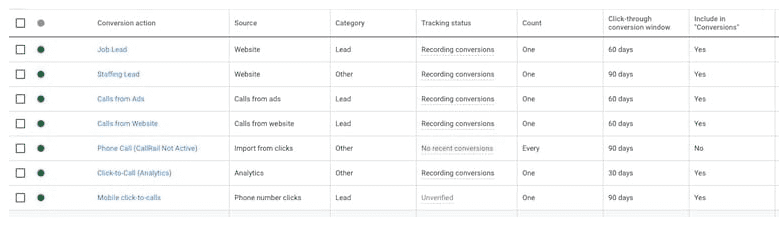
2. In the conversion actions table view, you can see under the Status column how any single conversion action is performing. You can click on a statuses to get more information about it or click on Resolve to see what could be causing it. Check out our Google Ads conversion tracking hang ups guide to know which statuses to look out for.

3. If everything looks good, then you’re ready to start analyzing data!

google tag installation

Looking at your Google Ads conversion data

Once you’ve set up your Google Ads conversion tracking, you’ll be able to start seeing conversion data in your account!

To see this data, you’ll want to add columns like “Conversions” (known as “conv.” in the column view of the platform), “Conversion Rate,” and “Cost/Conversion” to your view. That way, you can leverage those PPC metrics to know you’re getting the most bang for your buck.

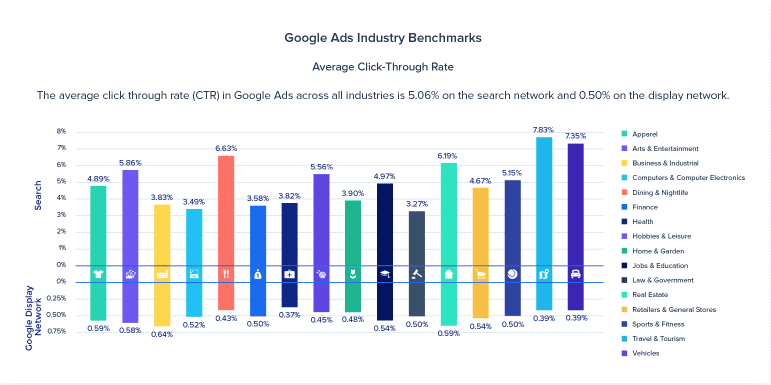
And if you’re wondering how your conversion data stacks up against competitors, check out this search ad industry benchmarks.

search conversion industry benchmarks

Troubleshooting Google Ads conversion tracking

You’re not seeing any data in your conversion columns.

If you’re seeing zero conversions in your conversion columns, don’t worry.

It can take up to 24 hours for conversion data to start appearing in Google Ads. If after 24 hours your conversion still isn’t showing up, it’s possible that no customers have converted yet. One way to test this is by going through the motions of a conversion yourself by clicking on your ad when it appears and doing whatever action is required to trigger the conversion on your site.

If after another 24 hours your conversion isn’t registering, double-check that the code was installed correctly. You might have to install additional plug-ins or move the code to a different part of the page.

The campaign has received many clicks, but not many conversions.

If your Google Ads campaign is receiving a lot of clicks, but few conversions, it’s time to take a look at your landing page.

A common reason for this kind of discrepancy is that you’re sending users to your homepage instead of a dedicated landing page. Sending users to your homepage can result in low conversion rates because the visitor doesn’t know what they’re getting into when they click on the ad.

It’s also possible that your landing page isn’t optimized for conversion. Is there a prominent CTA? A simple form? Is the key information available above the fold? If not, it could be that people aren’t ready to convert when they arrive at your site and so they don’t do anything at all—or worse yet, they leave without converting.

Finally, it’s important to make sure that if someone clicks on one of your ads, they’ll be reassured upon reaching their destination that they’ll get what you’ve promised them—including the same keywords and copy so that the person is reassured upon clicking on the ad that they’ll get what you’ve promised them.

Thanks for reading, and we hope you got as much out of this article as we did in writing it. Ultimately, there is a lot to know about Google conversion tracking, but no matter what level of expertise you are at with your conversion tracking, hopefully this guide helped answer some questions and get you headed in the right direction to be more successful with your paid media strategy.

If you like to access our complete library of Professional Grade Digital Marketing SOP’s for FREE, just click on the SOP link in the sidebar or click on this link.. Become an Expert Digital Marketer minus the work..

Dedicated to Your Marketing Success

John

wollongong digital marketing

Why Advertising Agencies are the Best Option for your Business

Why Advertising Agencies are the Best Option for your Business

If your business wants to grow, advertising agencies are the way to go.

As a small to medium sized business owner, you would have to agree that one of the toughest things to figure out is how to get the attention of potential clients. While we have all heard that word-of-mouth is the best way to generate business, today’s customers are inundated with ads, promotions and information overload. As a result, they can easily ignore your message or even worse, get annoyed with it. That’s why advertising agencies are so important. They are trained strategists who know how to deliver your message in a way that will capture the attention of your target market and keep it from interfering with their world.

They also have the resources and experience to help you reach your goals.


When you’re in the business of selling products and services, it’s important to have an advertising agency on your side. They have the knowledge and resources to help you achieve your business objectives. They have the ability to develop creative campaigns that will attract customers to your products and services.

What’s more, they can help you build a brand that people will recognize and want to buy again and again.

Business owners who work with advertising agencies tend to see results quickly—and those results are often measurable in terms of increased sales or improved customer loyalty.

You get access to their expertise.

Every marketing campaign is unique. Your business has its own goals, needs and audience. You need an ad agency that can develop a customized strategy for your company based on your specific needs.

The best ad agencies are able to take the time to understand your business and your goals before they develop a plan of action. They know that effective advertising requires more than just creating an ad campaign; it requires understanding who you’re trying to reach and what message will resonate with them.

You get access to new ideas.

You’ve got a business to run, and you don’t have time to spend hours on your marketing strategy.

Fortunately, an advertising agency can help you get the most out of your marketing dollars. They can bring fresh perspectives to your business, helping you develop creative campaigns that will appeal to your target audience. They can also provide insight into the latest trends in your industry so you can stay up to date with current events.

You get access to more qualified leads.

It’s no secret that marketing is a challenging endeavor. In order to succeed, you need to get your message across to the right people at the right time—and that means being able to reach a diverse range of demographics.

You need to get access to more qualified leads.

When you work with an advertising agency, they are able to offer you a wealth of opportunities that would otherwise be unknown to your business. This includes access to advertising platforms and markets that might not be available to smaller businesses like yours.

You also get access to more qualified leads.

When companies advertise on TV or radio, they are often advertising to everyone in their local area or even state. This means that the leads generated by these ads may not be targeted enough for your business needs. With an advertising agency, you get access to a network of professionals who will target their campaigns specifically at your ideal customer base.

At the end of the day, an ad agency is the ideal choice because they are experts at creating marketing material. While they will require payment for the services they provide, it is a small investment that can pay off in a big way. Their expertise will result in a better advertising campaign than you could ever run on your own.

Ultimately, the agency you choose will depend on your own needs and preferences. But if you are searching for an advertising agency that can provide your business with primary or secondary marketing tools, such as commercials or advertisements, then an ad agency may be just what you need to help your company thrive.

Dedicated To Your Marketing Success

John

wollongong digital marketing


Call Now Button