Free Marketing Toolkit Opt-in
(02) 42444411 info@ybrmarketing.com.au
Time, How Important is it to You?

Time, How Important is it to You?

How bad do you really want it?

Here’s the thing – each day has a finite number of minutes.  And how you spend each one determines if or if not you achieve your goal.

Think about that.

If you focus for 1/2 your time on things that are not in line with your goal….it will take you twice as long to achieve your goal.

But it’s worse than that. “Because goals feed on momentum”

Meaning that the faster you gain traction for achieving your goal, the faster you achieve your goal, and the better the chance that actually do achieve it.

I often hear people say things like, “I really want to achieve (whatever, income, a fitness goal, whatever)” but there are things I can’t control that get in the way.  They are things like emails, texts, phone ringing, wife needs something, husband needs something, kids need something, kids have no boundaries so they scream incessantly if they don’t get their way…and on and on.

But here’s what I think:

If your goal is more important than those interruptions, then you would do anything to avoid those interruptions. You see, what you spend your time on is what is important to you. If you are continuing to allow the ding of a new email or text coming in to stand in the way of your success, what you are really doing is making responding to emails more important than your goal.

Which is actually ok. Because it’s your life.

And at the end of your life, if you would rather say “I answered 29,487,890 emails within 2 minutes each” than “I wrote 3 books, coached 387 people to success, and empowered thousands to greater peace through my trainings” then that’s your choice.

Hey, I GET that if you are an emergency responder that you have to answer your texts when on call.  But you probably aren’t. And if you are, you have off time. And I GET when you say, well I have to spend time with my kids, with my wife or husband. I GET that.

But wouldn’t it be better to spend 2 quality hours with them where your head is in the game, than to spend 8 hours telling them to go away because they are interrupting you?

Wouldn’t it better to find ways to develop boundaries with your children or spouse and end up spending MORE quality time and less “interruption time”?

Look, I know you might be thinking, “John, you just don’t know my situation”. And you are right, I don’t. But I do know this…success is your choice.  And if whatever you are currently spending time on is more important than success…keep doing it.

But if you really want success, and it’s really important to you, wouldn’t it pay to figure out how to deal with all the things that hold you back from success? Here’s the thing…that’s what I’ve done in my life.

“One challenge at a time”. I learned how to make a fulltime income online.

Then I learned how to make a fulltime income online showing people how to make a fulltime living online. I’ve struggled with answering each email as soon as it comes in. Because I really want to. But when I consider the cost…answering every email that comes in is holding me back from being able to reach literally millions of people and help them achieve their goals.

Because the distraction of answering every email when it comes in keeps me from scaling operations to generate hundreds of thousands of subscribers instead of hundreds. The distraction of answering every email that comes in keeps me from starting new businesses, new websites, writing new emails, writing new books, creating new trainings.

So the question is…how important is it to me?

How important is success to me?

Is it important enough to choose to spend my time on things that matter?

(It is)

What about you?

What is holding you back?

What is eating your time?

Are you willing to go through the rest of your life allowing that “time eater” to control you, or are you going to make a change and choose what you focus on?

Are you willing to come to the end of your life and say “I answered texts, I answered emails, I let the kids scream,

I let my family control me”  or do you want to come to the end of your life and say “I changed lives, I spent quality time with my children and taught them to respect my time, I spent quality time with my wife and husband, and we had a great life together because of the deep respect we have for each other, I had the financial success that enabled me to provide better for my family, and it allowed me to help others less fortunate?”

Look, I know this has been…long and winded. But I don’t know any other way to fully expose to you my deep thought on this issue. You see, it’s about more than just “time management” or “writing a to-do list” or “eliminating distractions” it’s about choosing what you succeed it, and simply achieving your dreams – YOUR dreams, not the consequences of your decision to just keep allowing the that detract and distract to continue to run your life.

Do you want to be in control of your life and accomplish your dreams? Or do you want to allow other things, and other people, to rule you and accept their domination by…just letting them rule you?

Or do you want to take to task the challenge…how important is it to you?

How important is your dream? And are you man or woman enough to make the hard choices – and follow through – to accomplish that dream?

John

I wish to acknowledge “Sean Minze Life Coach and Entrepreneur of Note” for some of his valuable insights..


3 Easy Steps To Get More Customers, Than You Ever Thought Possible!

3 Easy Steps To Get More Customers, Than You Ever Thought Possible!

Step 1: Select A Narrow Target Market

A 100 watt light bulb, like the kind of lightbulb we normally have in our homes, lights up a room. By contrast a 100 watt laser can cut through steel.
Same energy, dramatically different result. The difference being how the energy is focused.
The same is true of your marketing. You have a limited amount of money. If you focus too broadly, your message will be too scattered to be relevant to anyone.
The goal of your ad is for prospects to say, “hey that’s for me”.
Take the example of a photographer. If you look at ads from most photographers you’ll often see a laundry list of services like:
Portraits
Weddings
Family photography
Commercial photography
Fashion photography etc..
The technical way photography is done may not change very much from situation to situation, but let me ask you a question. Do you think someone looking for wedding photography would respond to a different ad than someone who’s after commercial photography?
Do you think a bride-to-be looking for a photographer for her wedding might be looking for something radically different than a purchasing manager from a heavy machinery distributor looking to photograph a truck for a product brochure of course!
However if the ad just rolls out a broad laundry list of services, then it’s not speaking to either prospect, therefore it’s not relevant, therefore it will likely be ignored by both market segments.
That’s why you need to choose a narrow target market for your ad.
Being all things to all people will lead to marketing failure. This doesn’t mean you can’t offer a broad range of services, but understand that each category of service is a separate campaign. My advice is first dominate one target market, then move onto the next.

Step 2: Create A Lead Generating Ad

Even in a narrow target market, all prospects should not be treated equally.
All other things being equal, the more money you can spend marketing to high probability prospects, the better your chances are of converting them to a customer.
Just like our proverbial archer, who has a limited number of arrows, you have a limited supply of money for your marketing campaign, so it’s essential you invest it wisely.
For example if you have $1,000 to spend on an ad campaign which reaches 1000 people, you’re essentially spending $1 per prospect.
Now assume that out of the 1000 people the ad reaches, 100 are potential prospects for your product. By treating them equally, as you would have to do with mass marketing, you’re wasting $900 on uninterested and unmotivated prospects to reach the 100 who are interested.
What if instead of treating them all equally you could sift, sort and screen so that you were only dealing with high probability prospects and not wasting valuable time and marketing dollars on uninterested and unmotivated prospects?
You could then spend the whole $1,000 on the 100 high probability prospects. That would allow you to spend $10 on wooing each of them instead of the measly $1 per prospect you’d have if you treated them all equally.
With ten times the firepower aimed at the right targets, do you think we’d have a better conversion rate? of course!
But how do we separate the wheat from the chaff? The short answer is we bribe them into telling us!
Don’t worry there’s nothing underhanded here. We offer an “ethical bribe” to get them to identify themselves to us. For example, our friend the photographer could offer a free DVD telling prospective brides exactly what they should look for in a wedding photographer and showcasing some of his work.
A very simple lead generating ad could be headlined: “Free DVD Reveals The 7 Costly Mistakes To Avoid When Choosing A Photographer For Your Big Day”.
Anyone requesting this “ethical bribe” would be identifying themselves as a high probability prospect. You now have at least their name and address which would go onto your marketing database.
Remember the goal is simply to generate leads. Avoid the temptation of trying to sell from your ad. At this early stage you just want to sift out the uninterested and unmotivated so that you can build your database of high probability prospects.
Here’s the other big reason you want to avoid selling directly from your ad: at any given time (on average) about 3% of your target market are highly motivated and ready to buy immediately. These are the prospects most mass marketing hopes to convert. However there’s a further 7% who are very open to buying and another 30% who are interested but not right now. The next 30% are not interested and finally the last 30% wouldn’t even take your product if was free.
If you tried selling directly from your ad, you’d be targeting only the 3% who are ready to buy immediately and losing the other 97%. By creating a lead generating ad, you increase your addressable market to 40%. You do this by capturing the 3% who are immediate buyers but also by capturing the 7% who are open to talking as well as the 30% who are interested but not right now. By going from a 3% addressable market to 40%, you’re increasing the effectiveness of your advertising by 1,233%

Step 3: Follow Up Until They Buy Or Die

So now that you have your database of high probability prospects, what do you do next? Quite simply you market to them until they buy or die.
It may seem like I’m advocating being obnoxious and pestering people to buy until they cave in. Nothing could be further from the truth.
Traditional selling is focused on pressure tactics like “always be closing” and other silly little close techniques which are based on pressure.
It makes the seller a pest who the prospect wants to avoid.
Instead of being a pest, I advocate becoming a welcome guest. Send your high probability prospects a continuous stream of value until they’re ready to buy.
This could be in the form of tutorials, articles, case studies or even something as simple as a monthly newsletter that’s related to their area of interest.
This builds trust, good will and positions you as an expert and educator rather than just a sales person going for the jugular.
Various technology tools make it easy to automate this continuous follow up mechanism, making this a cost effective and scalable way of building up a huge pipeline of interested and motivated prospects.
Some of these prospects will convert into customers immediately, while others will do so weeks, months or even years later.
The point is that by the time they’re ready to buy, you’ve already built a solid relationship with them based on value and trust. This makes you the logical choice when it comes time for them to make a buying decision.
This is one of the most ethical and painless ways of selling, because it’s based completely on trust and an exchange of value.
While your competitors are blindly shooting arrows every which way in the hope of hitting one of the 3% of immediate buyers, with “The Visible Target Technique” you’re focusing all of your firepower on a clear and visible target.

Tune in to the minds of customers. Find out all you can about their wants and needs. And, above all, do what you do best – market your services! If you are in a niche business and want to increase the possibility that people with that need will find you Stop waiting for things to happen and make them happen yourself. Your destiny is just a click away!

To Your Success

John

Importance of a Customer Retention Strategy

Importance of a Customer Retention Strategy

Understanding The Metrics

Customer retention is critical — particularly for B2B companies. But unfortunately, building a sound customer retention strategy isn’t a high priority for many businesses.

While it is important to understand the number of customers that leave in a given period of time, it is equally important to understand the impact of these customers on your income.
Retention and churn rates can help you understand why the customers are leaving you and how to make appropriate adjustments in order to keep them happy enough to stay.
So I thought I would put together a few metrics you should really take notice of with your business.

Revenue Churn Rate refers to the percentage of revenue your business loses from its existing customers over a given period of time.
Gross revenue retention (GRR) is the amount of recurring revenue in a given period of time that is lost due to fluctuations in exchange rate, downselling or selling a cheaper product than the one you intended to sell to the customer.
As already mentioned, the churn rate is a measure of how many percent of your customers no longer do business with you over a certain period of time.

The simplest measure of customer loyalty is your company’s customer churn rate, Click here for your Free Calculator which refers to the rate at which customers stop doing business with you.
Your loyalty rate is the opposite of your churn rate and measures how many of your customers go into a competitor or stop buying within the same period.

Customer loyalty rates measure the number of customers a company holds over a given period of time.
Retention metrics are useful for companies with subscription-based customers, but not as relevant for companies with longer customer lifecycles, such as car dealerships. SaaS (software as a service) retention is a key metric that measures the percentage of customers that you retain over a period of time and shows current and future revenues.

Repeat Buyer Rate is the percentage of customers who have been with the company or company since their first purchase. To calculate your repeat rate, divide the number of customers who made multiple purchases over a period of time (the total number of customers in this period) and multiply by 100 to get a percentage number. This is the percentage of your customer base that has made more than one purchase.

Loyal Customer Rate measures the number of customers who repeatedly shop with you within a certain period of time. It can be calculated by dividing the number of regular customers by the total number of customers.

Developing a STOP THE CHURN Strategy

With this knowledge, it is easy to design retention strategies that increase customers “desire to purchase and maximize sales. It’s estimated that a mere 5 percent increase in customer loyalty can lead to a 25-95 percent increase in sales, thus customer loyalty is an invaluable metric which also happens to be a useful measure of customer loyalty.

It’s a good idea to evaluate your switching rate (the rate at which a customer will change brand or products) semi-regularly to keep the pulse of how customers respond to your retention and marketing efforts. To be more effective,
I recommend calculating your RPP rate (Retention per product) for different purchases to better understand where your customer journey starts and ends. If you keep an eye on these metrics, you can estimate where customers are crashing on their journey and give you the opportunity to take preventive action.

This new metric, known as Customer Experience Score, focuses on customer experience of your product or service over a period of time and examines how you can add improvement to retain customers. Customer loyalty measurements give your company an insight into whether you are able to meet customer needs over time.

Monitoring retention ratios is critical for a company to understand the lifelong customer benefit and quantify the effectiveness of its marketing strategy and customer service programs. For example, your organization should look at customer loyalty metrics such as customer lifespan and churn rate. Customer loyalty measurements and how they are carried out: Look for important customer loyalty indicators such as customer service life, value and return on investment.

Remember that it is cheaper and more efficient to increase the turnover of existing customers than new acquisitions. The money, time and effort to attract new customers is wasted if you do not keep your existing customers.

Understanding the bond is important because it gives you an insight into how your customers think about renewing their business with you. The primary metrics for understanding customer loyalty are the loyalty rate and churn rate, these metrics can tell you everything you need to know about why customers return or go. Retention rates are an important measure of the success of your entire loyalty marketing strategy, but to get a full picture, you need to understand why your customers choose to return or not.

It is important that loyalty indicators show how satisfied customers with your product or service are and how willing they are to try out competitors in your market.

It is important to know how many loyal customers you have because part of your turnover is customer-oriented. Your performance is measured by the number of monthly recurring revenues (MRR) from new accounts and business opportunities and not by customer satisfaction. Return on sales gives you an idea of how healthy the loyalty strategy is that works.

John     

wollongong digital marketing

YBR Marketing 

Big Business vs Small Business Marketing

Big Business vs Small Business Marketing

Does Size Really Matter?


Well in marketing your small business, it most certainly does. In this article I’m going to show you one of the biggest marketing miscalculations made by small business when it comes to getting their message to their target market.

I can’t tell you how widespread this problem is, and it’s at the very core of why most small business marketing fails.

If you’re a small business owner, you’ve almost certainly given some thought to marketing and advertising, things like; What approach are you going to take? Where are you going to advertise? What are you going to say in your advertising? 

The most common way most small business owners decide on doing this is by looking at large, successful competitors in their industry and copying what they’re doing.

This seems a pretty smart thing to do right? Copy what other successful businesses are doing and you will also become successful?

But honestly, this is one of the quickest ways to fail and I’m very certain it’s responsible for the bulk of small business failures. Here are the two major reasons why I think that is..

Large Companies Have A Different Agenda


Large companies have a very different agenda when it comes to marketing than small businesses do. Their strategies and priorities differ from yours significantly.

The marketing priorities of a large company looks something like this:

  • Pleasing The Board Of Directors
  • Appeasing Shareholders
  • Satisfying Superiors’ Biases
  • Satisfying Existing Clients’ Preconceptions
  • Winning Advertising And Creative Awards
  • Getting “Buy In” From Various Committees And Stakeholders
  • Making A Profit

The marketing priorities of a small business look something like this:

  • Making A Profit

As you can see there is a world of difference in the marketing priorities of small and large companies. So naturally there is a big difference in strategy and implementation.

Big Companies Have A VERY Different Budget


Strategy changes with scale
. This is very important to understand.

Do you think, for example, a large property investment company has a different property investment strategy to the average small property investor? Of course they do..

The large company’s strategy simply won’t work on a small scale. You can’t just build one floor of of a skyscraper and leave it at that. You need them all.

If you have an advertising budget of  millions and years to get a profitable result, then that’s going to be a very different strategy to needing to make a profit immediately with a $5000 to $10,000 budget.

Using a large company marketing strategy, your $10,000 is going to be a drop in the ocean. It will be totally wasted and ineffective because you’re using the wrong strategy for the scale that you’re operating at.

Branding and ego-based mass marketing is the domain of large companies. To achieve any kind of cut through requires an enormous budget and the use of expensive MASS media.


So What’s left For The Little Guy?


Direct response marketing gives small businesses a way to compete on a small budget. It’s designed to be accountable and ensure you get a return on investment that is measurable.

Following the path of other successful businesses is smart, but it’s vital that you understand the full strategy you’re following and that you’re able to implement it.

Strategy from an outside observer’s perspective can be very different to the reality. If you’re following a strategy that has different priorities to you or has a vastly different budget then it’s highly unlikely it will generate the kind of result you’re hoping for.

Yours In Market Success

John

Thanks go to Allan Dib from Successwise for his insights

Future of Marketing, What Skills You Will Need?

Future of Marketing, What Skills You Will Need?

market research wollongong

How will marketing change in the coming decade?

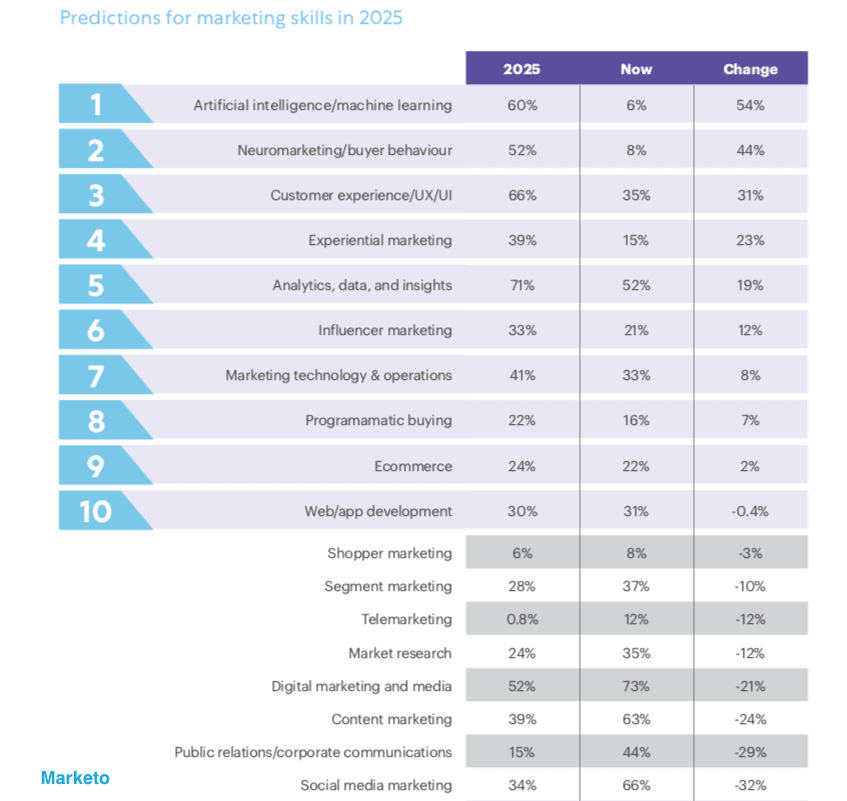
According to Adobe’s Marketo, “Niche marketing capabilities will become the most important skills. Current tasks performed by a marketing team will decline in importance or be automated into oblivion.”

In-demand marketing skills wollongong

Most In-demand

The marketer of 2025, will need skills that focus around analytics, data & insights, CX (customer experience)/UX (user experience), AI (Artificial Intelligence) & machine learning, Vanity metrics, which include impressions, “likes,” shares, comments, followers, open rates, views, traffic, time on site, bounce rate open rates etc.. digital marketing & media (though this is declining), and marketing technology & operations, marketing will essentially be a technology hub.

analytics marketing wollongong

Sophisticated Data Analytics

In fact, only analytics remains a top priority from the current crop of top four skills. They includes digital marketing and media, Social media marketing will halve and content marketing.

Sophisticated data analytics, will be the most important skill in the marketing.

To provide deeper, more advanced insight into patterns, trends, and themes that may be hidden within data. is a Data analysis that uses predictive modeling, machine learning algorithms, deep learning, business process automation.
neuromarketing wollongong

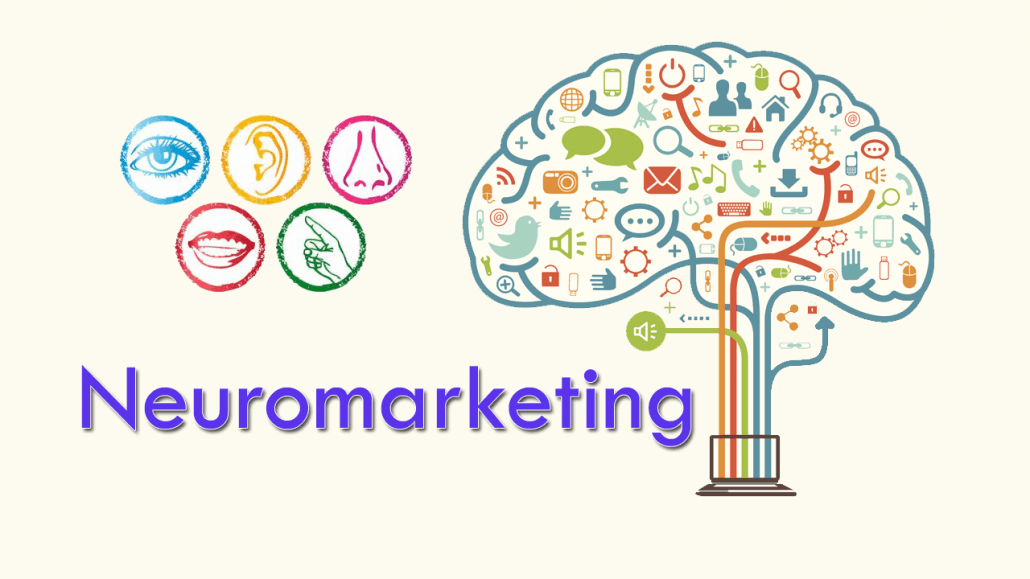
Neuromarketing

Neuromarketing is the study of customer behavior and how it affects the buying pattern of a target audience. For example, researchers may find that a particular stimulus causes a response in the brains of test subjects that’s correlated with a desired behavior (e.g. the release of a ‘feel good’ hormone). Obviously, as a marketer, you’d want to know these cause-effect relationships so that you can apply the principles to your creative, and thereby drive improvements to your key conversion metrics.(Smart Insights)

marketing skills predictions wollongong

The marketing team of tomorrow, may not be recognised by the marketing team of today. Artificial intelligence and advanced data analytics will be the key tech drivers.  Neuromarketing, which barely exists today, will feature strongly. 

The day-to-day functions of marketers will change greatly. For instance, there will be much less emphasis on decisions around email marketing or social media. Rather, those kinds of tasks will be more and more reliant on machines to make better decisions than people make today.

Yours In Marketing

John

 wollongong digital marketing

Call Now Button